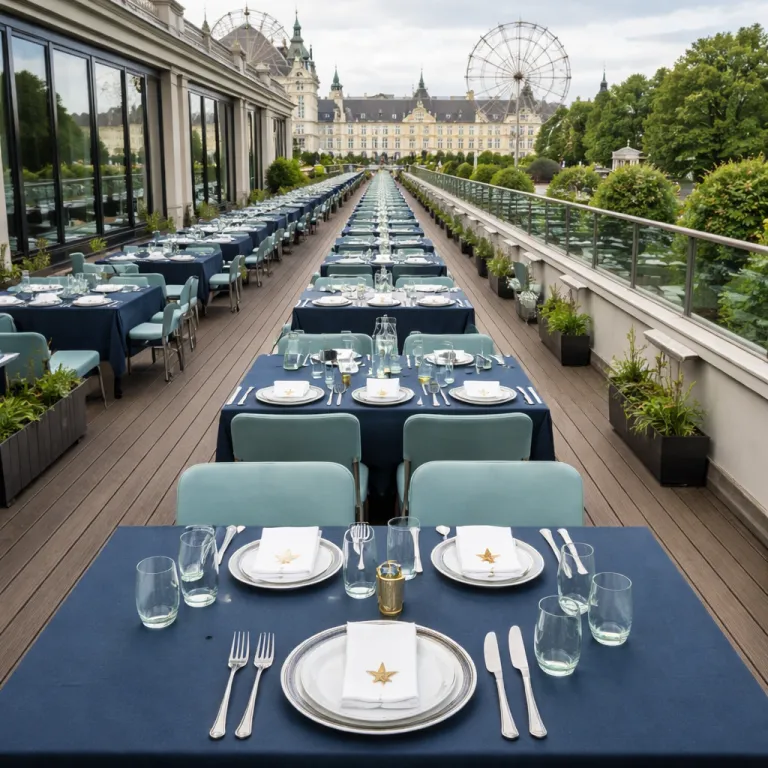
Tivoli Gardens, the Michelin guide and Denmark’s new gastronomic signal
The decision to stage the Nordic Michelin Guide ceremony inside Tivoli Gardens places Copenhagen at the centre of the region’s culinary map. In a single move, the city links its historic amusement park, its most ambitious restaurants and the broader ambitions of Denmark as a serious gastronomy nation. For luxury travellers tracking future Michelin-starred restaurants in Copenhagen, that choice confirms the Danish capital as the place where New Nordic cuisine, hotel dining and high-level food strategy now intersect.
Inspectors use anonymous visits, detailed culinary evaluations and sustainability assessments to decide which restaurant receives a Michelin star or the newer Green Star distinction. Those same methods now shape expectations for starred restaurants across Copenhagen, where more than twenty addresses collectively hold dozens of Michelin stars, and three of them currently carry three stars. According to the 2024 Nordic selection of the Michelin Guide, the answer to the question “Which restaurants in Copenhagen have three Michelin stars?” is precise: Geranium, Jordnær and Noma, as confirmed in the official Michelin Guide Nordic Countries 2024 announcement.
For hotel general managers and F&B directors, the ceremony in the city is not just theatre but a working guide to guest expectations. When the Michelin Guide highlights sustainable dining and plant-based menus, it raises the bar for every modern restaurant inside a luxury property. In practice, that means rethinking everything from the breakfast table to late-night room service, especially for business-leisure guests who now plan booking decisions around access to acclaimed Copenhagen tasting menus and the wider network of Michelin-starred restaurants across Denmark.
How Copenhagen hotels are elevating cuisine, from kong hans to kadeau copenhagen
Across Copenhagen, hotel dining rooms are pivoting towards contemporary Nordic cuisine with the same precision as independent starred restaurants. At d’Angleterre, the historic Kong Hans Kælder restaurant, often shortened to Kong Hans or Hans Kælder by regulars, shows how French cooking techniques can coexist with Danish produce in a serious Michelin-starred setting. Its vaulted cellar room, polished wine list and exacting service now act as a benchmark for other star restaurants embedded in hotels across Copenhagen, Denmark, and its long-standing star rating gives hotel owners a concrete model of how fine dining can support room rates.
Geranium, led by Rasmus Kofoed, sits in a stadium rather than a hotel yet its three Michelin stars influence every ambitious hotel restaurant in the city. Kadeau Copenhagen, with its focus on Bornholm ingredients and a distinctly modern approach to Nordic cuisine, has a similar effect on how chefs think about terroir-driven food in Danish restaurants. When luxury travellers search for high-end Michelin experiences in Copenhagen, they increasingly expect hotel concierges to secure a table at these addresses or offer in-house cooking that reflects the same excellent standards of technique, wine pairing and service.
Newer properties are responding quickly: 1 Hotel Copenhagen has already recruited Green Michelin-starred chef Chantelle Nicholson, signalling a commitment to sustainable cuisine that aligns with the Green Star philosophy, as highlighted in the hotel’s own launch communications. Nimb Hotel inside Tivoli Gardens uses its position near the ceremony venue to refine its restaurant and bar programme, from Danish pastries at breakfast to a more international mix of Italian, Japanese and Middle Eastern influences at dinner. Even smaller design-focused properties now feel pressure to offer restaurant-quality breakfasts, thoughtful wine lists and occasional tasting menus that echo the language of the Michelin Guide without claiming to be fully starred restaurants themselves.
Where to stay for michelin restaurants copenhagen 2026 and serious gourmet itineraries
For business travellers extending a stay, location inside the city matters as much as the room category when planning around Michelin restaurants Copenhagen 2026. Staying near Kongens Nytorv or the inner harbour keeps you close to Kong Hans Kælder, several Bib Gourmand addresses and a cluster of modern Nordic restaurant options with strong wine programmes. In Østerbro and the stadium district, Geranium anchors a pocket of contemporary cuisine, while Kadeau Copenhagen and other starred restaurants sit a short taxi ride away, allowing guests to combine meetings with multi-course tasting menus in a single evening.
Vesterbro and the Meatpacking District offer a different rhythm, with more casual Danish restaurants, Mexican middle-market concepts and American-influenced grills sitting alongside ambitious Nordic and Middle Eastern kitchens. Here, travellers can move from a Green Star-level sustainable restaurant to a relaxed bar serving natural wine in a few minutes on foot, building an informal itinerary that still reflects the city’s Michelin-level standards. Those planning complex trips that combine Copenhagen with wellness or medical travel in Asia often pair these neighbourhood stays with long-haul flights, and our guide to premium health and hotel experiences in Thailand at this dedicated resource for Danish travellers reflects that same joined-up approach to booking.
For executives, the practical question is simple: which hotel makes it easiest to move between meeting rooms, a Michelin-starred restaurant table and the airport. Central luxury properties now build concierge teams who understand the Michelin Guide calendar, hold relationships with star restaurants and can secure last-minute seats at both French and Italian or Japanese counters. As Copenhagen hosts events such as the MCE North & West Europe congress and the Nordic Michelin ceremony, the city’s hotels increasingly act as full gastronomic hubs, covered Michelin-style from breakfast through late-night room service, rather than just places to sleep between meals.