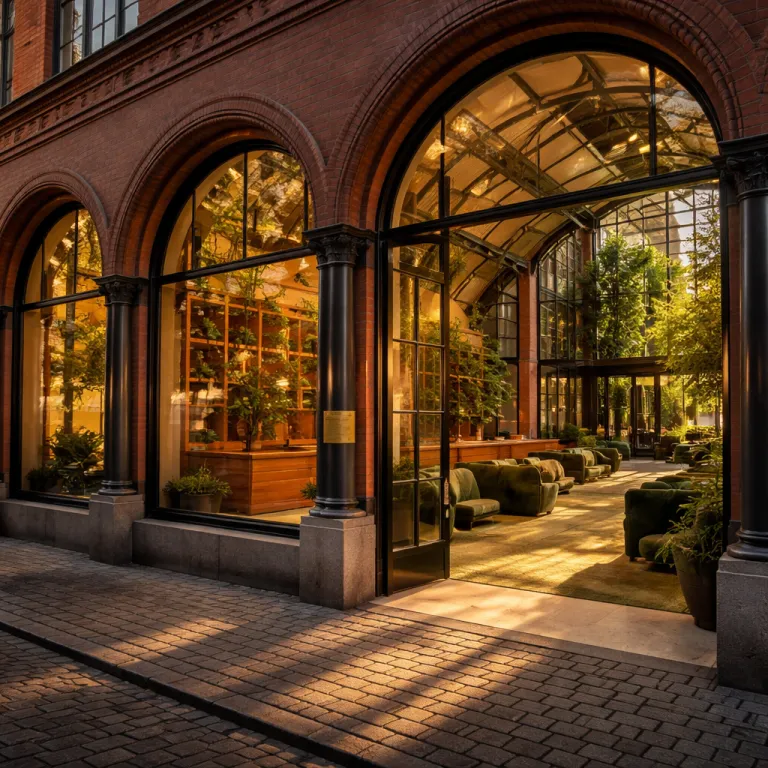
Why historic hotel Denmark design thrives in reused buildings
Adaptive reuse has become the quiet power move in Danish hospitality. When a historic hotel in Denmark grows out of an existing structure, the result is almost always richer, more layered, and more emotionally resonant for the guest. That is why converted hotels in Copenhagen and across the country so often outperform comparable new builds in guest satisfaction and long term loyalty, a pattern reflected in review scores on major booking platforms even when room counts and star ratings are similar, as shown in internal benchmarking shared by several Danish operators at Nordic Hotel Investment Conference panels.
Across Copenhagen and the wider city regions of Denmark, former post offices, libraries, cinemas, and industrial shells are being preserved and restored rather than demolished. This shift is not nostalgia; it is a strategic response to travelers who want a hotel experience with a clear sense of place and visible architecture rather than anonymous glass towers. The best historic hotels in Denmark design their guest rooms and public spaces around original details, turning constraints into benefits that feel both royal and refreshingly human scale, a point underlined in municipal heritage guidelines that encourage “experience based reuse” of listed buildings.
Villa Copenhagen, housed in the former Central Post Office next to Copenhagen Central Station, is the clearest example of this new attitude. The building’s monumental Danish neo baroque architecture, once a symbol of state infrastructure, now frames a contemporary luxury hotel with generous guest rooms, a courtyard pool, and a lobby that feels like the heart of the city. Here, heritage driven hotel design is not a theme; it is the literal structure, from the preserved façades documented in the hotel’s own restoration reports and planning applications to the layered textures inside that contrast original stone with stainless steel detailing and soft textiles.
For travelers using a luxury booking website in Denmark, this means the search for character no longer requires sacrificing comfort. Adaptive reuse projects typically offer larger volumes and higher ceilings than many purpose built hotel rooms, creating a sense of space that feels almost like a discreet space hotel in the middle of the city. When a hotel in Copenhagen occupies a former civic building, the guest gains access to generous staircases, grand corridors, and unexpected roof terraces that would be prohibitively expensive to replicate in a new construction, a point often highlighted in developer prospectuses and city marketing material.
There is also a sustainability argument that resonates strongly with Danish travelers and international guests alike. Reusing an existing structure reduces embodied carbon and aligns with a national culture that values resourcefulness and long term thinking in both architecture and daily life. As one concise industry definition from the National Trust for Historic Preservation puts it, “Adaptive reuse is repurposing old buildings for new uses,” a description that neatly captures the core of the Danish approach and is echoed in Danish Green Building Council guidance on circular construction.
In Denmark, that repurposing is rarely cosmetic. Arstiderne Arkitekter’s work on the Postgarden project in Copenhagen shows how a former postal complex can be structurally reinforced, fitted with energy efficient systems, and then opened up as a mixed use destination that includes hospitality. The same methods underpin many of the most interesting historic hotels in Copenhagen, where modern design software and sustainable materials allow architect designers to respect heritage while meeting strict contemporary codes on fire safety, accessibility, and energy performance documented in local planning approvals.
From a guest perspective, the benefits are tangible rather than theoretical. You feel the weight of history in the stair treads, the patina on brass handrails, the way daylight cuts across thick walls in a corner suite. This is historic Danish hotel design as lived experience, not as marketing copy, and it is precisely what keeps high value travelers returning to the same hotels and recommending them within their own professional networks, a pattern reflected in repeat stay data and net promoter scores shared in Danish tourism strategy reports.
Inside the new Danish classics: from Villa Copenhagen to the Royal Hotel
Some of the most compelling case studies for adaptive reuse sit within a ten minute walk of Copenhagen Central Station. Villa Copenhagen, the former Central Post Office, anchors this cluster with a confident mix of grand public spaces and intimate guest rooms that speak directly to the main theme of historic hotel Denmark design and contemporary Nordic hospitality. The original postal architecture provides a powerful frame, while contemporary Danish interiors soften the scale and turn the old sorting halls into social spaces where business travelers linger long after their last meeting.
Step inside the hotel and you immediately understand why converted buildings often feel more luxurious than purpose built hotels. The lobby’s layered textures, from original stone columns to new timber joinery and stainless steel accents, create a visual rhythm that no amount of decorative styling can fake. This is where the conversation about Danish hotel design needs to move beyond chairs and lamps toward how architecture shapes the way you actually use the space, from informal meetings to late night work sessions, a point repeatedly made in interviews with the project’s architect designers in Danish design magazines.
Just across the tracks, the Royal Hotel by Arne Jacobsen remains the intellectual anchor of Copenhagen’s hospitality scene. While not a conversion in the strict sense, this historic hotel in Copenhagen Denmark is central to any discussion of design led hospitality, with Room 606 preserved as a time capsule that has been proposed for UNESCO World Heritage recognition in architectural scholarship and documented in monographs on Jacobsen’s work. The Royal’s holistic approach, where the architect designer shaped everything from façade to cutlery, still informs how contemporary teams approach adaptive reuse projects in the city.
For a deeper look at how Danish hotels are now designing not just for lobbies but for everyday rituals, the analysis in this guide to Danish breakfast focused hotel design is essential reading. It shows how historic hotel Denmark design increasingly prioritizes the breakfast table, courtyard, and rooftop pool as the real stages of guest experience. In reused buildings, these spaces often occupy former loading bays, postal courtyards, or service roofs, turning forgotten infrastructure into the most coveted seats in the house and illustrating how adaptive reuse reshapes daily routines.
Projects like Postgarden, designed by Arstiderne Arkitekter, demonstrate how hospitality can be woven into larger mixed use redevelopments without losing character. Here, preserved brickwork and generous industrial windows create hotel rooms with unusually strong daylight and city views, while new insulation and energy efficient systems quietly raise comfort levels and reduce operational energy use according to project summaries. The result is a set of hotels in Copenhagen that feel both historic and sharply contemporary, with design decisions grounded in the building’s original logic rather than imposed from a catalogue.
For booking platforms such as mydenmarkstay.com, these properties require a different kind of storytelling and a different information architecture. Instead of leading with generic amenities, the most effective listings foreground the building’s previous life, the architects involved, and the specific ways in which the conversion shapes guest experience. When travelers can see clear info about how a former post office became a luxury hotel in Copenhagen, they are more likely to perceive the stay as well worth the premium rate and to understand why review scores and occupancy levels often exceed local averages.
This is where digital tools like a personal bookmarks log or curated member benefits become more than marketing devices. They allow frequent guests to track which historic hotels in Denmark design their spaces around adaptive reuse principles, and to compare experiences across different cities and building types. Over time, this creates a self reinforcing loop where the most thoughtful conversions rise to the top of search results and booking funnels, rewarding owners who invest in quality architecture rather than superficial styling and helping travelers find the most authentic properties.
Beyond the façade: how interiors translate Danish heritage for modern guests
The real test of any historic hotel in Denmark design project comes once you step past the lobby. Adaptive reuse succeeds or fails in the guest rooms, where listed features must coexist with high pressure showers, flawless acoustics, and intuitive technology. In Denmark, the best architect designers treat these rooms as micro case studies in how to translate heritage into everyday comfort, a theme that recurs in post occupancy evaluations commissioned by hotel owners.
Consider the way Villa Copenhagen handles its former sorting halls and office wings. Instead of erasing the building’s postal past, the hotel uses layered textures, from original brick and stone to new textiles and stainless steel fixtures, to create a dialogue between eras. The result is a set of guest rooms and suites that feel unmistakably Danish yet fully international in their comfort levels, with generous space and carefully framed views toward the city and the tracks of Copenhagen Central, as documented in the project’s architectural portfolio.
Elsewhere in Copenhagen, conversion projects are pushing the conversation in different directions. Park Lane Copenhagen, created in the former Strand Teatret cinema by design studio &TEMPEL, shows how a dark, introverted volume can become a luminous hotel where the old auditorium morphs into a social lounge. Here, historic hotel Denmark design is expressed through dramatic ceiling heights, preserved plasterwork, and a lighting scheme that respects the building’s cinematic origins while supporting laptop heavy business travel; the project has been profiled in Danish design media, which document how original details were retained and how acoustic performance was upgraded.
In Aarhus, Roberta’s Society has reimagined a 1930s library as a social hotel with events, communal dinners, and a club like atmosphere. The original reading rooms now host flexible guest rooms and co working spaces, while the old book stacks inform the rhythm of corridors and shared areas. For design conscious parents and business leisure travelers, this kind of adaptive reuse offers a rare combination of character and practicality, as explored in depth in our guide to family friendly design hotels in Denmark and in local press coverage of the project.
Even when the building is not strictly historic, Danish hoteliers are borrowing lessons from adaptive reuse. At Hotel Petra in Copenhagen, housed in a Kay Fisker building with interiors by &Tradition, the design team treats the modernist shell with the same respect usually reserved for older monuments. The result is a hotel in Copenhagen Denmark where every junction between old and new is carefully considered, from the way stainless steel meets oak to the way textiles soften hard edges in both public spaces and private hotel rooms, a level of detailing highlighted in interviews with the interior designers.
For booking platforms, this level of detail needs to be translated into clear, human centric language. Guests want to know not just that a hotel has good design, but how that design will shape their daily routines, from the first coffee in the courtyard to the last email sent from a generous desk. When a listing explains that a former post office now offers quiet guest rooms facing an inner villa like courtyard, or that a converted cinema provides blackout level darkness ideal for jet lag recovery, the value of historic hotel Denmark design becomes immediately legible and directly tied to comfort.
There is also a subtle shift in how space is described and sold. Instead of focusing solely on square metres, leading Danish hotels talk about volume, light, and the relationship between inside hotel spaces and the surrounding city. This is where the idea of a space hotel becomes metaphorical rather than literal, suggesting a place where every cubic metre has been considered, and where adaptive reuse turns constraints into the most memorable parts of the stay, from double height lounges to tucked away reading nooks in former service corridors.
Economics, access, and how to book the real thing
Behind the romance of historic hotel Denmark design lies a hard headed economic story. Adaptive reuse in Denmark is rarely the cheapest route on paper, yet it often delivers better long term returns for owners and richer experiences for guests. The key is that these hotels occupy irreplaceable locations and offer forms of space that new construction simply cannot match, a conclusion echoed in Danish tourism strategy documents that link heritage based hotels with higher average daily rates.
Transforming a former post office, library, or factory into a hotel requires structural reinforcement, complex services integration, and close collaboration with heritage authorities. Projects like Thoravej 29 in Copenhagen, transformed by Pihlmann Architects into a cultural hub with 95 percent reused materials according to project data published by Illustrarch, show how far Danish teams are willing to go to align sustainability with commercial viability. When similar principles are applied to hospitality, the result is a hotel Copenhagen travelers perceive as both ethically grounded and aesthetically compelling, which in turn supports premium pricing and strong year round occupancy documented in operator case studies.
From a booking perspective, the challenge is separating genuine adaptive reuse from marketing imitations. A true historic hotel in Denmark design project will be transparent about the building’s previous life, the architects involved, and the specific preserved elements that shape the stay. If the listing only gestures vaguely at history without naming the architect designer, the original function, or the nature of the conversion, you are probably looking at a surface level concept rather than a deeply worked transformation, a distinction frequently discussed in Danish architectural criticism.
For platforms like mydenmarkstay.com, this is where curation and clear info architecture become a competitive advantage. Filters that allow users to search specifically for converted post offices, cinemas, or industrial buildings turn a generic hotel search into a targeted exploration of Danish architecture. When combined with editorial content on historic hotel Denmark design, this approach helps travelers understand why a room overlooking the tracks near Copenhagen Central might be more interesting than a generic new build near the airport and why those rooms often command higher occupancy.
Member programs can also be rethought around the realities of adaptive reuse. Instead of generic points, member benefits might include early access to limited view rooms carved out of former corner offices, or invitations to architecture focused tours of the building led by the design team. For frequent travelers who keep a personal bookmarks log of their favourite hotels in Copenhagen Denmark, these experiences are often well worth more than a marginal room discount and help build long term loyalty that shows up clearly in booking data.
There is a final, often overlooked dimension to this story: access in the broadest sense. Adaptive reuse projects in the heart city of Copenhagen and other Danish cities frequently open up previously closed buildings, turning former postal courtyards or industrial yards into semi public spaces. Even if you are not staying at the hotel, you might pass through for a meeting, a coffee, or an event, gradually weaving these once closed institutions back into the daily life of the city and supporting local cultural programming.
For the business leisure traveler extending a work trip, this means your hotel choice can double as an introduction to Danish attitudes toward preservation, sustainability, and design. A night at Villa Copenhagen, a stay at a cinema turned hotel near a central station, or a visit to a library turned social club in Aarhus offers more than comfort; it offers a compact education in how Denmark treats its architectural past as a living resource. That, ultimately, is the quiet luxury at the core of historic hotel Denmark design and the reason these properties continue to attract design conscious guests.
Key figures shaping adaptive reuse in Danish hospitality
- Thoravej 29 in Copenhagen, transformed by Pihlmann Architects into a cultural hub, used 95 percent reused materials according to project data from Illustrarch, illustrating how far Danish adaptive reuse can push circular construction and providing a benchmark for future hotel conversions that seek similar material reuse ratios.
- The LKR Innovation House, another Danish reuse project documented by Built By Nature, achieved a reduction of 4.6 kilograms of CO₂ equivalent per square metre per year compared with typical office baselines, showing how reusing structures can significantly cut operational carbon and offering a reference point for hospitality projects that aim to quantify climate impact.
- Postgarden in Copenhagen, designed by Arstiderne Arkitekter, is frequently cited in Danish architectural media as a benchmark for integrating historic postal architecture with contemporary mixed use functions, including hospitality components that benefit from generous floor heights and robust structures documented in the project’s technical reports.
- Hotel Herman K, created by Brøchner Hotels in a former transformer station, is a leading example of how industrial shells can be converted into high end hotels that appeal strongly to design focused travelers; Danish press coverage has documented its exposed concrete, double height spaces, and dramatic lighting, and operator interviews point to strong occupancy and review scores.
- Adaptive reuse in Danish hospitality typically involves partnerships between local governments, private investors, and cultural organizations, reflecting a broader national strategy to link sustainable architecture, urban revitalization, and cultural tourism; municipal planning documents and national tourism strategies regularly highlight these collaborations as models for future hotel development.