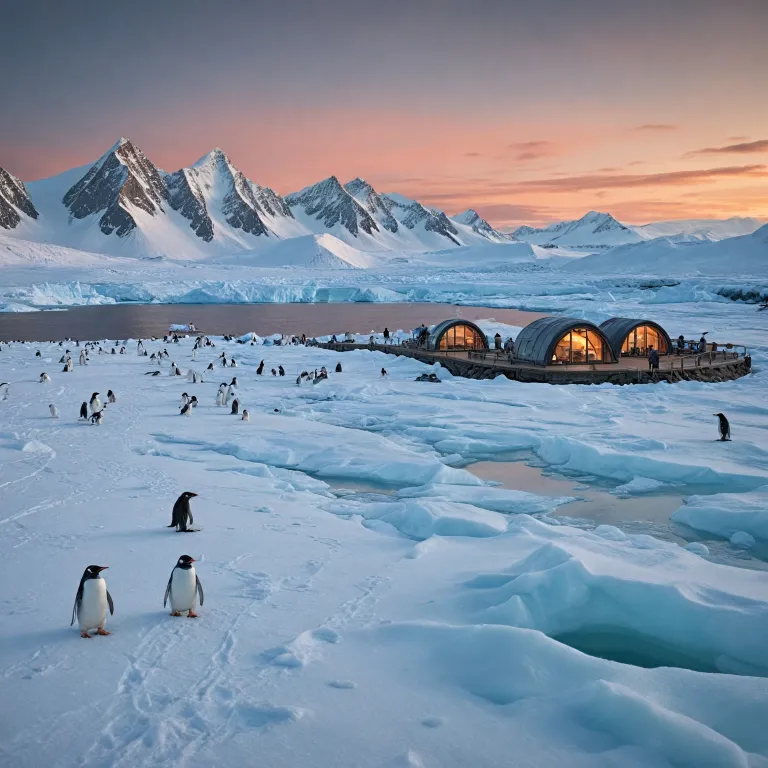
Luxury perspectives from Denmark on the idea of a hotel in Antarctica
For Danish travelers used to refined Nordic design, the idea of a hotel in Antarctica raises both fascination and practical questions. There are no traditional hotels in Antarctica, yet a handful of highly controlled glacier camp concepts now deliver comfort that rivals premium Nordic retreats while remaining temporary and removable. From a Danish perspective, these camps feel like an ultra remote extension of the country’s own love of clean lines, natural materials, and quiet luxury.
White Desert Ltd., a British operator, has become the reference for luxury expeditions in the antarctic, offering a style of stay that feels closer to a private lodge than a tented camp. Its Whichaway Camp and Echo Camp in Queen Maud Land show how a camp can be both indulgent and environmentally responsible, something that resonates strongly with sustainability minded guests from Denmark. These are not antarctica hotels in the conventional sense, but they set the benchmark for what hotels Antarctica could mean in the future.
Each day on such an expedition is carefully choreographed, from the antarctica fly segment out of Cape Town to guided activities on the ice and sea. Danish guests used to seamless premium travel in Europe will recognize the same level of planning, yet here every decision is shaped by extreme cold, katabatic winds, and fragile glaciers. Thinking about places to stay in this context helps Danish travelers recalibrate expectations, shifting from fixed hotels to agile, low impact glacier camp models that can be removed without trace.
From Copenhagen to the south pole: how luxury expeditions replace classic hotels
When planning a journey from Denmark to the south pole region, the traditional sequence of airport, transfer, and hotel quickly gives way to a more complex expedition model. Travelers usually fly to Cape Town, then board specialized aircraft for the antarctica fly leg to Union Glacier or a similar union glacier runway, where the real adventure begins. Instead of checking into a hotel in Antarctica, guests transition into a network of carefully designed camps that function as both base and sanctuary.
White Desert’s Whichaway Camp, Echo Camp, and related sites such as glacier camp concepts near three glaciers or wolf fang peaks are engineered to deliver warmth, privacy, and comfort on the ice. These camps replace the idea of fixed hotels antarctica with modular pods, refined interiors, and attentive service teams who manage every day detail, from gourmet meals to safety briefings. For Danish travelers familiar with sustainable luxury in cities like Copenhagen or eco focused stays in Dallas, reading about leading eco friendly hotels and premium sustainable experiences can provide a useful benchmark before comparing them to an antarctic glacier camp.
Instead of a single building, the accommodation footprint is spread across smaller units, reducing impact on the land and surrounding glaciers. Guests move between communal lounges, private sleeping pods, and activity zones, creating a rhythm that feels more like a polar village than a conventional hotel. This approach allows operators to respond flexibly to changing ice conditions, while still offering the level of comfort that premium travelers from Denmark expect when they stay Antarctica for several days.
Sustainability standards: what Danish travelers should know before they stay Antarctica
Danish travelers are among Europe’s most sustainability conscious guests, and that mindset is crucial when evaluating any hotel in Antarctica style experience. Operators such as White Desert work under strict guidelines from bodies like the International Association of Antarctica Tour Operators, which regulate how many guests can visit, where they can land, and how waste is managed. For travelers used to reading environmental policies for luxury eco hotels in Denmark, it is reassuring to see similar or even stricter standards applied to every glacier camp and pole camp on the continent.
At Whichaway Camp and Echo Camp in Queen Maud Land, solar power, efficient insulation, and removable structures are central to the design. These camps are dismantled at the end of the short antarctic summer, leaving the ice and land as undisturbed as possible, which is a key difference from permanent hotels. Danish travelers can compare this philosophy with the approach taken by luxury eco hotels in Denmark, where energy efficiency, low waste operations, and local sourcing are also central pillars.
Because there are no conventional antarctica hotels, every stay Antarctica is effectively an expedition, even when it feels luxurious. Guests must respect strict rules about wildlife distance, waste, and movement on the glaciers, whether they are at union glacier, a bay camp near gould bay, or a more remote glaciers retreat concept. For Danish travelers, this aligns with familiar Nordic values of frugality, respect for nature, and thoughtful travel, making the absence of classic hotels Antarctica less a limitation and more an ethical advantage.
Mapping the key camps: from union glacier to gould bay and three glaciers
Understanding the geography of a hotel in Antarctica style trip helps Danish travelers choose the right itinerary for their interests and comfort level. Many expeditions use Union Glacier as a logistical hub, where a glacier camp provides the first structured place to stay Antarctica after the antarctica fly segment from Cape Town. From this union glacier base, smaller groups branch out to specialized camps such as pole camp near the south pole, bay camp near gould bay, or more secluded glaciers retreat style sites around three glaciers.
Each of these places to stay offers a different relationship with the ice, sea, and surrounding land. At gould bay, for example, guests may focus on emperor penguin colonies and sea ice formations, while at three glaciers the emphasis might be on ice climbing, ski touring, and exploring crevasse fields. Wolf fang areas, with their dramatic rock spires rising from the ice, appeal to travelers who want strong visual drama during their stay Antarctica, even if they are more interested in photography than technical climbing.
For Danish guests used to combining city breaks with nature escapes, it can be helpful to think of these camps as distinct neighborhoods within a vast frozen city. A pole camp near the south pole offers a sense of achievement and history, while a bay camp closer to the coast connects more directly with the sea and wildlife. When planning multi stop trips, travelers may combine union glacier, a glaciers retreat concept, and a visit to Queen Maud Land, creating a layered experience that goes far beyond what any single hotel or cruise could provide.
Choosing between cruise, fly cruise, and land based glacier camp stays
For Danish travelers researching a hotel in Antarctica style experience, the first major decision is whether to arrive by cruise, fly cruise, or a direct antarctica fly itinerary to a land based glacier camp. Traditional expedition cruises cross the Drake Passage by sea, offering a sense of gradual approach but also several days of potentially rough waters. Fly cruise options shorten this by flying over the Drake Passage, allowing guests to board a ship already in the antarctic region and focus more of each day on landings and activities.
Land based itineraries, such as those offered by White Desert, skip ships entirely and focus on camps like Whichaway Camp, Echo Camp, union glacier, and specialized pole camp or bay camp sites. These trips appeal to guests who prefer to stay Antarctica on solid ice and land rather than at sea, and who value the privacy of small groups over the social atmosphere of larger antarctica hotels style ships. For Danish travelers used to tailored luxury in Copenhagen or Aarhus, the intimacy of a glacier camp can feel closer to a private villa than to a conventional hotel.
Each model has implications for environmental impact, comfort, and access to specific glaciers or wildlife hotspots. Cruises and fly cruise itineraries can reach a wider range of coastal sites, while land based camps excel at deep experiences in focused areas such as Queen Maud Land or three glaciers. When comparing these options, Danish guests should consider their tolerance for sea travel, their interest in the south pole versus coastal wildlife, and how many nights they wish to spend in remote places to stay far from any urban infrastructure.
Planning from Denmark: timing, safety, and aligning polar travel with Nordic values
Planning a hotel in Antarctica style journey from Denmark requires more lead time and preparation than almost any other trip. Operators typically run expeditions only during the short antarctic summer, when temperatures are less extreme and the ice and sea conditions are more predictable. Because capacity is limited to a few hundred guests per season across all camps and ships, Danish travelers should secure their preferred glacier camp or pole camp months in advance.
Safety is managed through specialized aircraft, experienced polar guides, and strict protocols at every union glacier, bay camp, or glaciers retreat site. Travelers are briefed on how to move on the ice, what to wear each day, and how to respond to changing weather, ensuring that even remote places to stay remain as secure as possible. “Are there traditional hotels in Antarctica? No, there are no traditional hotels in Antarctica. Accommodations are primarily aboard expedition ships or in temporary camps.”
For Danish guests, aligning this type of travel with Nordic values means prioritizing operators who demonstrate transparent sustainability practices and respect for scientific research zones. Reading about other nature focused journeys, such as an Iceland family vacation filled with natural wonders, can help set expectations for weather, remoteness, and flexible planning. Ultimately, the absence of permanent antarctica hotels encourages a mindset where every stay Antarctica is a privilege, and where the luxury lies as much in responsible access to the south as in the comfort of Echo Camp, Whichaway Camp, or any future hotels Antarctica may one day resemble.
Key statistics for luxury Antarctic expeditions
- Maximum number of guests per season on certain luxury expeditions is approximately 300 people.
- Entry level price range for high end Antarctic expeditions starts from around 15 950 USD per person.
- Operational window for most land based luxury expeditions is limited to the Antarctic summer months.
Essential questions Danish travelers ask about staying in Antarctica
Are there traditional hotels in Antarctica?
There are no permanent, traditional hotels in Antarctica comparable to those in Copenhagen or other European capitals. Accommodation is provided either on expedition cruise ships or in temporary, removable camps such as Whichaway Camp, Echo Camp, or union glacier style glacier camp facilities. These structures are designed to minimize impact on the ice and land, while still offering a comfortable stay Antarctica for a limited number of guests.
What activities are available during Antarctic expeditions?
Activities vary by itinerary but typically include guided landings on the ice, visits to penguin colonies, and scenic flights over glaciers and sea ice. Some expeditions offer more technical options such as ice climbing, ski touring, or exploring ice tunnels near three glaciers or Queen Maud Land. Many luxury trips also include the possibility of visiting the south pole from a dedicated pole camp, creating a once in a lifetime highlight for Danish travelers.
How do travelers reach Antarctic camps from Denmark?
Most Danish travelers first fly to a gateway city such as Cape Town, where they join their expedition group. From there, specialized aircraft handle the antarctica fly segment to union glacier or another prepared runway, bypassing the Drake Passage entirely. Once on the continent, smaller flights or overland vehicles connect guests to specific places to stay, including bay camp near gould bay, glaciers retreat concepts, or the flagship Whichaway Camp and Echo Camp in Queen Maud Land.